
I’ve never bothered with a specific bike for winter training. I’ve either just ridden my usual road bike all year round and accepted the increased need to perform distasteful tasks like cleaning and lubing the chain more frequently, or just ridden off road for most of the winter. After all there is to my mind few more miserable experiences than riding an expensive road bike for any distance during the winter months in the UK.
There are three main reasons for my antipathy for winter road riding. Firstly the weather is just generally awful. Unless you invest a significant amount of money (and many people do) in winter kit that leaves you totally insulated from the outside world and looking like a multicoloured Michelin Man the UK’s penchant for constant freezing wind and rain between the months of October and the following April make winter road riding the preserve of masochists and madmen. Then there’s the state of the roads. British roads are both legendary for their propensity to rapidly disintegrate at the first sign of a winters frost and the authorities mania for coating them in literally thousands of tons of rock salt to prevent idiot drivers in BMW’s becoming at one with the roadside scenery. Lastly, I just hate putting my treasured road bike through it. Sometimes I swear you can actually feel and hear the drivetrain grinding itself to bits as the slurry like paste of mud and road salt invades its inner workings and starts to corrode the bearings and chain links alike. The thought of subjecting my loverly unpainted Ti frame with its shiny new 11spd groupset that I’d scrimped so long to afford through that just gives me shivers.
This year however has proved a little different. My usual winter off road riding outlet has been somewhat curtailed by the little matter of a worldwide pandemic which has meant packing up the car and travelling to darkest Wales with a bike on the back of the car is going to be off the menu for awhile. Zwift and indoor turbo sessions are all well and good but like many people I’m starting to get more than a touch of cabin fever from being stuck at home more than usual. One brief venture out on one of my usual training loops was enough however to remind me of why my road bike usually hibernates during the winter months. Cleaning the poor old bike after the ride took almost as long as the ride itself and was about as much fun as farting in a spacesuit.
What was needed was a bike that I didn’t mind getting dirty. A bike that would shrug off those unseen winter potholes without a whimper. A bike with a drivetrain that would keep on shifting even when covered with mud and grit, and most importantly a bike with full length mudguards…… oh, and it couldn’t cost a fortune either. Did such a mythical beast exist? Off to browse eBay I went, and here’s what I came up with –
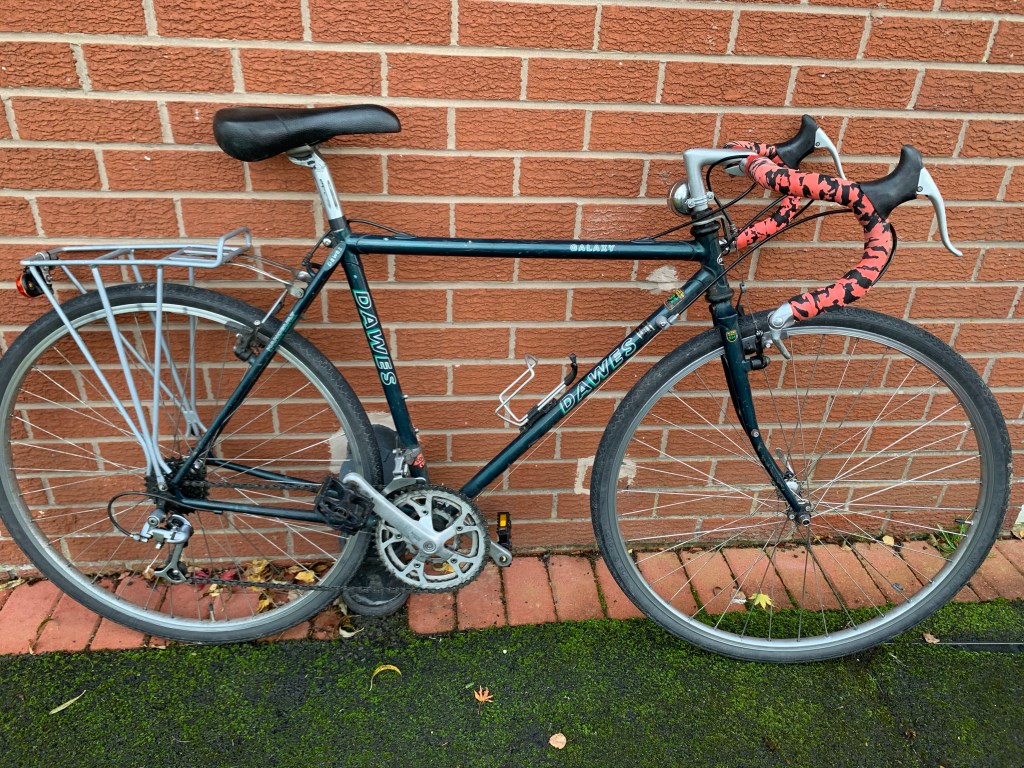
This my friends is perhaps one of the most well loved and certainly longest lasting models of bicycle ever produced. It’s a Dawes Galaxy of approximately mid 1990’s vintage with more miles under its hubs than the Space Shuttle, mine for a piffling £130. So what did the scrapings of my disposable income buy me? Well as bikes go the Dawes galaxy is definitely a British classic. Beloved of touring aficionados, and a mainstay of that very British pastime of the long distance Audax ride these steel framed beasts can be seen tootling along country lanes all over the country and beyond. It’s Reynolds 531st frame is built to last with enough braze-on’s to let you bolt racks to both ends and the clearance to run those all important mudguards. This very pre-loved example came complete with a classic Shimano 7 speed cassette on the back and a Biopace (remember them anyone?) Triple chainset up front. Shifting the sprockets is handled by the classic bar-end shifter which for many years was the only choice for the rather disparate cycling disciplines of Touring and Cyclo-cross. Here’s some detail pictures of the new steed in all its glory……
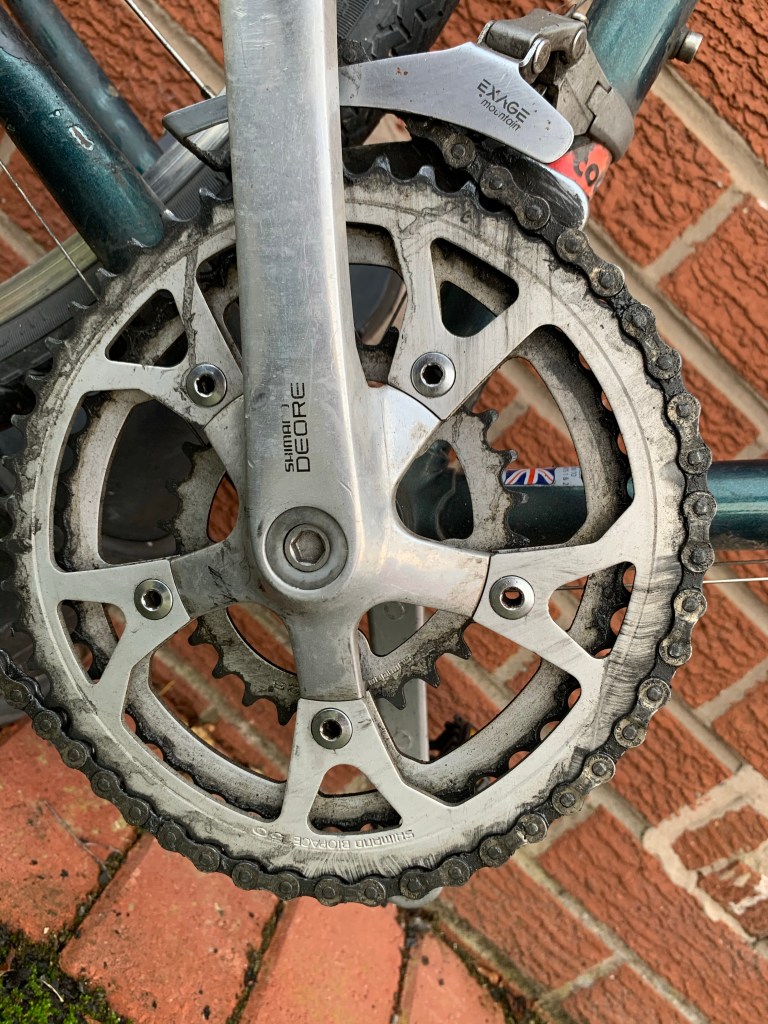

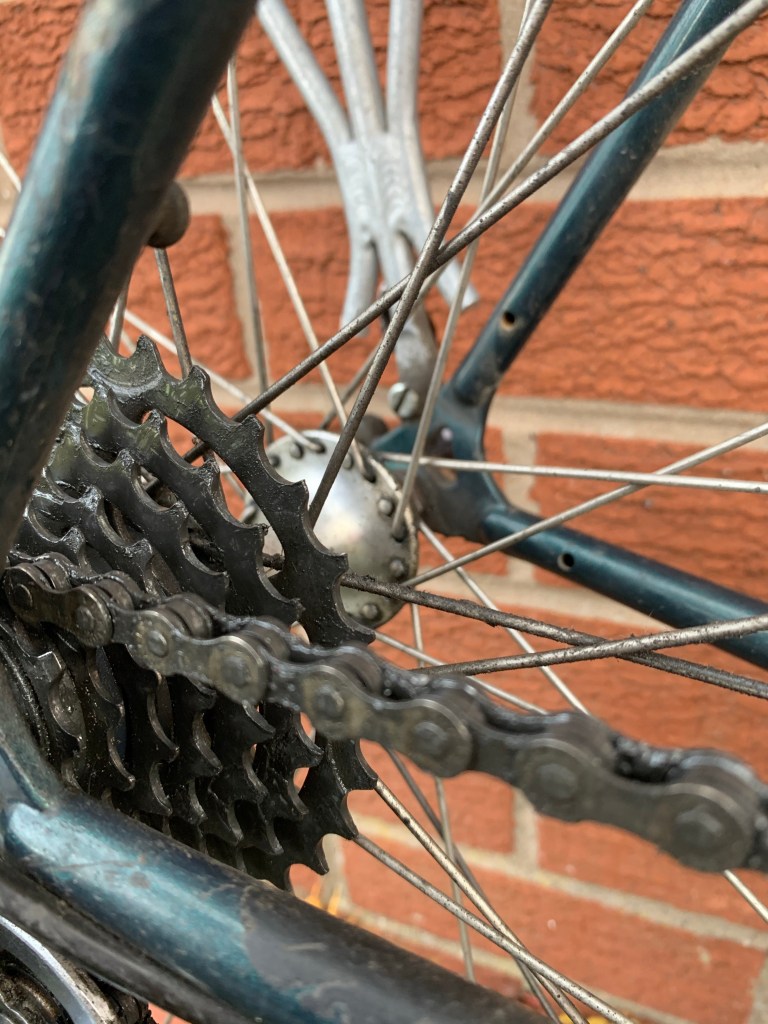
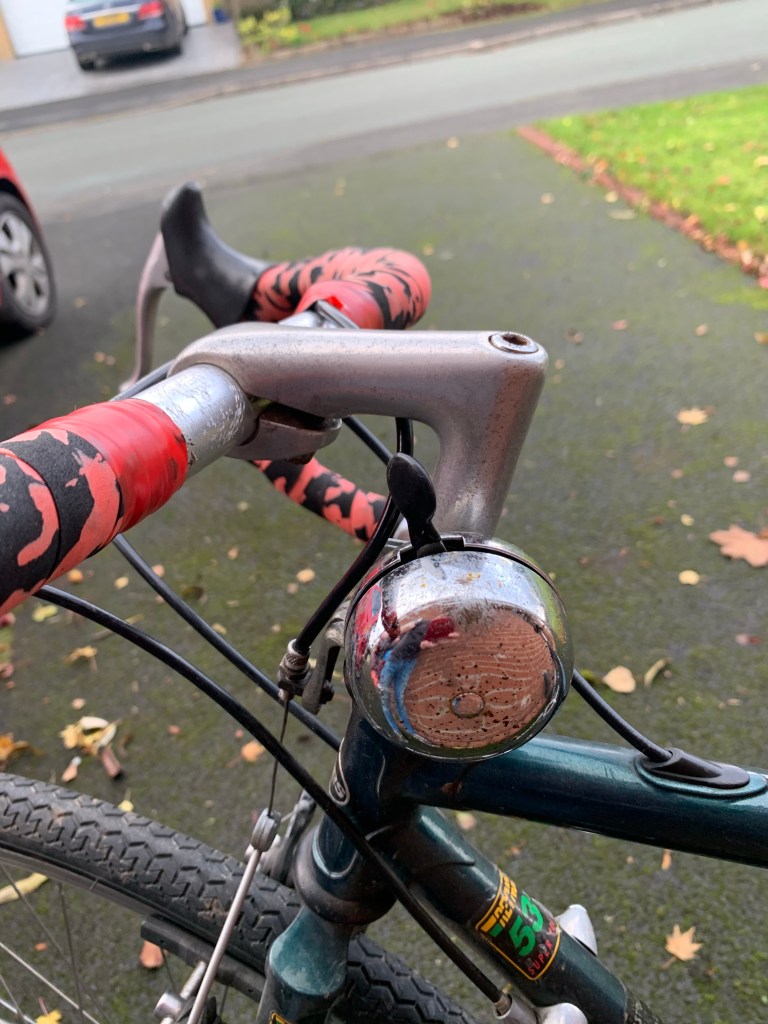
It did of course need some fettling. Firstly it was probably the only secondhand Galaxy in the world missing its mudguards, and the voluminous 35c wide Michelin World Tour tyres were so old I could get my thumbnail into the cracks in the side wall. This was quickly rectified with a set of nice new HKS full length mudguards and a pair of puncture resistant Schwable Marathon Plus tyres in a more sporty 25c width. I replaced the fag paper thin rear cantilever brake blocks with some I found in the depths of my spares box and made a token attempt to clean and relubricate the drivetrain.
So how did it ride? Well, surprisingly well all things considered. There really is nothing like a steel frame to ride. It’s like putting on a really comfy pair of old trainers. It’s a bit disconcerting how skinny the tubes appear if your used to the chunky modern carbon or aluminium offerings, but the ride feel is I still think hard to match. Considering this bike was designed to be loaded with panniers and bar-bags for multi day epic adventures, unloaded it feels remarkably spritely and almost sporty. Ok, its not going to win you a city centre Crit, or be the weapon of choice for the club run sprint to the next signpost race, but it will tootle along more than happily and feels stable and forgiving. This is not a bike that will try and buck you straight off if you hit a minor pothole, which is precisely what I wanted.
It wasn’t all milk and honey though. After a couple of rides it was pretty obvious there was some work to be done. The headset was pretty notchy and the bottom bracket was creaking alarmingly under load, in fact it was abundantly clear that most of the drivetrain was probably several thousand miles past its best …… so back onto eBay I went. The great thing about older bikes like the galaxy is that everything you need is still available but the prices are a real eye opener, and in a good way for once. A new cassette for my 11spd road bike would cost me around £50 (even in the post Christmas sales), but a 7 speed item for the Dawes is only £16. In fact a new chain, cassette, cartridge bottom bracket and a pair of jockey wheels for the rear mech came to less than £45 including postage, that is a bloomin bargain in anyone’s money. So, for less money than a modern cassette the entire drivetrain got a refurb and the headset responded to a good clean and a re-grease, the result? No more Nasty creaks and a noticeably smoother ride. The next issue was the shifters and brake hoods, that turned into a whole different tale of minor woe – so more on that in another episode.
 The Declining Cyclist